
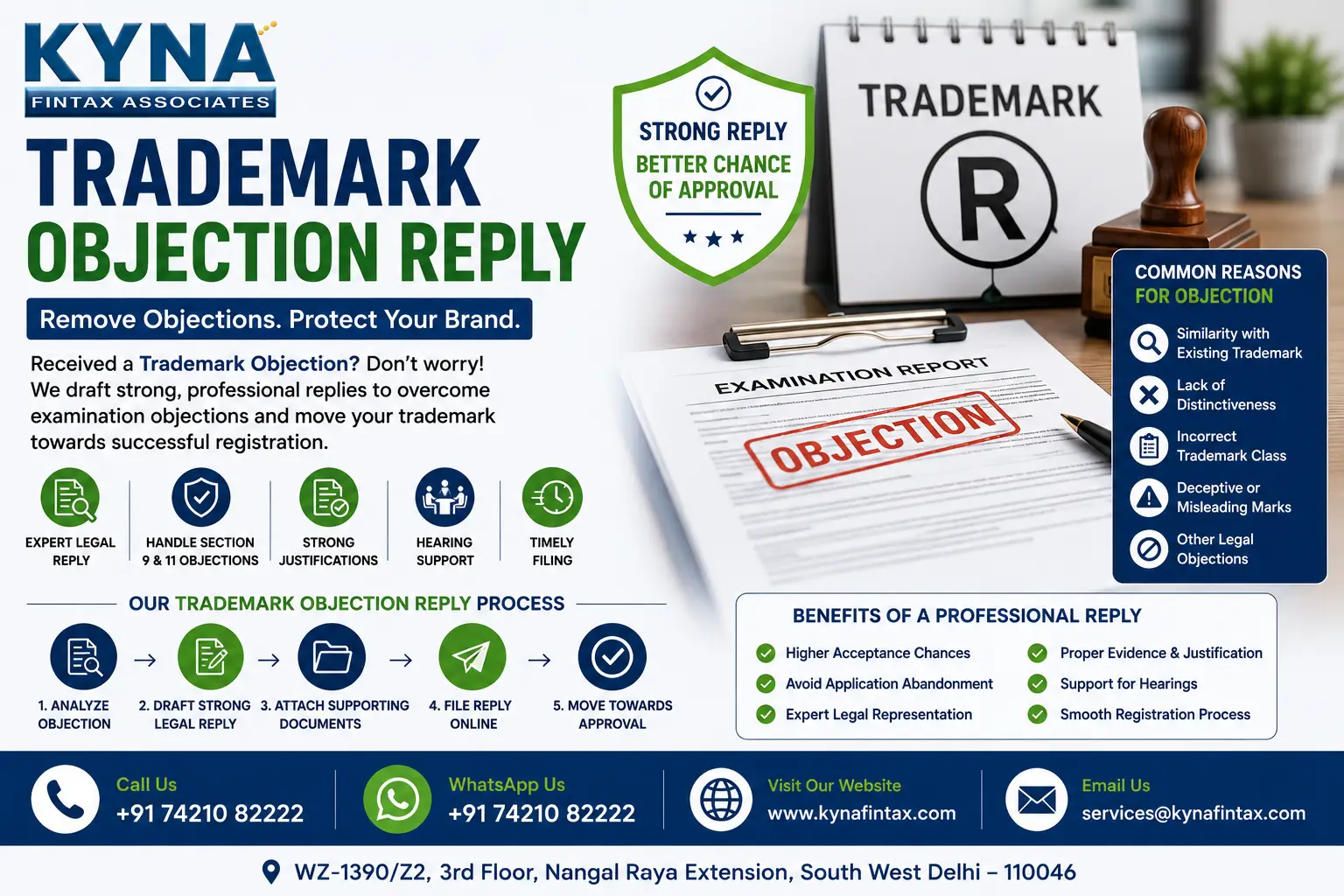
Trademark Objection Reply in India
Trademark Registration is an important step for protecting your brand identity, business name, logo, or slogan. However, many trademark applications receive a Trademark Objection during the examination stage. Receiving an objection does not mean your trademark is rejected permanently. It simply means the Trademark Registry requires clarification, justification, or additional documents before approving the application.
A properly drafted Trademark Objection Reply can help remove objections and move your trademark toward registration successfully.
In this detailed guide, you will understand:
- What is a Trademark Objection
- Reasons for trademark objection
- Types of objections
- How to file trademark objection reply
- Documents required
- Trademark examination process
- Common mistakes to avoid
- Trademark hearing process
- FAQs related to trademark objection reply
What is a Trademark Objection?
A Trademark Objection is an official response raised by the Trademark Examiner after reviewing a trademark application.
When the examiner finds issues with the application, an Examination Report is issued asking the applicant to explain why the trademark should be accepted for registration.
Trademark objection is a common part of the registration process and can often be resolved through a strong legal reply.
Difference Between Trademark Objection and Trademark Rejection
Many applicants confuse objection and rejection.
Trademark Objection
An objection means clarification or justification is required from the applicant.
The trademark application is still active and can proceed further after a proper reply.
Trademark Rejection
Rejection happens when the registrar refuses the trademark after reviewing the reply or hearing.
A rejected application may require appeal or fresh filing.
Common Reasons for Trademark Objection
Trademark objections are usually raised under Sections 9 or 11 of the Trademark Act.
Objection Due to Similar Trademark
If your trademark resembles an existing registered or applied trademark, objection may be raised.
Examples:
- Similar brand name
- Similar pronunciation
- Similar logo design
Lack of Distinctiveness
Generic or descriptive names often face objections because they do not uniquely identify the business.
Example:
Using common terms directly related to products/services.
Incorrect Trademark Class
Filing under the wrong class may trigger objections.
Deceptive or Misleading Marks
Trademarks containing misleading information may face examination issues.
Improper Applicant Details
Errors in:
- Applicant name
- Address
- Business type
- Ownership details
can also lead to objections.
Offensive or Restricted Terms
Using prohibited words, national symbols, or offensive content may attract objections.
What is a Trademark Examination Report?
After filing the trademark application, the Trademark Registry examines the application and issues an Examination Report.
The report contains:
- Objection reasons
- Legal sections applicable
- Similar trademark references
- Required clarifications
Applicants must submit a Trademark Objection Reply within the prescribed timeline.
Importance of Trademark Objection Reply
A professionally drafted reply significantly increases the chances of trademark approval.
Key Benefits:
- Prevents abandonment of application
- Clarifies legal position
- Establishes brand uniqueness
- Supports trademark acceptance
- Helps avoid hearing complications
Time Limit for Filing Trademark Objection Reply
Trademark objection replies should generally be filed within the specified period mentioned in the examination report.
Failure to respond within the deadline may result in abandonment of the trademark application.
Documents Required for Trademark Objection Reply
The required documents depend on the nature of objection.
Common Documents Include:
- Examination report copy
- Trademark application details
- Authorization letter
- Brand usage proof
- Invoices
- Website screenshots
- Social media presence proof
- Advertising materials
- MSME/Udyam certificate (if applicable)
- Affidavit of usage
Step-by-Step Process for Trademark Objection Reply
Step 1: Analyze Examination Report
Carefully review the objection raised by the examiner.
Understanding the exact legal issue is extremely important.
Step 2: Draft Professional Reply
Prepare a detailed legal response addressing all objections with proper explanations and supporting evidence.
Step 3: Attach Supporting Documents
Upload all relevant proof supporting the trademark claim.
Step 4: File Reply Online
Submit the objection reply through the Trademark Registry portal.
Step 5: Examination Review
The examiner reviews the reply and may:
- Accept the trademark
- Schedule a hearing
- Raise further objections
Trademark Hearing Process
Sometimes the registrar may schedule a hearing after reviewing the objection reply.
During the hearing:
- Legal arguments are presented
- Trademark distinctiveness is explained
- Supporting evidence is submitted
A properly prepared hearing representation improves approval chances.
Common Grounds Used in Trademark Objection Reply
Professional trademark replies usually focus on:
- Brand uniqueness
- Distinctiveness
- Honest adoption
- Prior usage
- Market reputation
- No likelihood of confusion
- Visual and phonetic differences
Trademark Objection Under Section 9
Section 9 objections relate to:
- Generic names
- Descriptive marks
- Lack of distinctiveness
- Non-unique trademarks
These objections are generally handled through legal explanation and proof of use.
Trademark Objection Under Section 11
Section 11 objections relate to:
- Similar existing trademarks
- Possibility of public confusion
- Deceptively similar marks
Professional comparison and legal analysis are important in such cases.
Common Mistakes While Filing Trademark Objection Reply
Avoid these mistakes:
- Delayed filing
- Incomplete reply
- Generic explanations
- No supporting documents
- Poor legal drafting
- Ignoring examination report points
- Incorrect evidence submission
Why Professional Assistance is Recommended
Trademark objection replies involve legal drafting and technical understanding of trademark law.
Professional assistance helps:
- Improve acceptance chances
- Draft legally strong replies
- Handle Section 9 & 11 objections
- Prepare hearing submissions
- Avoid abandonment risks
- Save time and effort
Benefits of Successful Trademark Objection Removal
Once the objection is resolved:
- Trademark moves toward registration
- Brand gets stronger legal protection
- Business credibility improves
- Future infringement protection becomes easier
Frequently Asked Questions (FAQs)
Does trademark objection mean rejection?
No, objection only means clarification or justification is required.
Can trademark objection be removed?
Yes, many objections are successfully resolved through proper replies.
What happens if objection reply is not filed?
The trademark application may become abandoned.
Is hearing mandatory after objection?
Not always. Some objections are cleared directly after reply submission.
Can I file objection reply myself?
Technically yes, but professional drafting improves success chances significantly.
Trademark Objection is a common stage in the trademark registration process and should not be considered a failure. With a properly drafted Trademark Objection Reply supported by legal arguments and evidence, many applications are successfully accepted and registered.
Timely response, proper documentation, and professional legal drafting are the key factors for successful objection removal and smooth trademark registration.
Why Choose Kyna FinTax LLP for Trademark Objection Reply?
- Expert trademark professionals
- Strong legal drafting support
- Reply for Section 9 & 11 objections
- Hearing assistance support
- Fast response filing
- Affordable professional services
- End-to-end trademark assistance
Contact Details
Kyna FinTax LLP
WZ-1390/Z2, 3rd Floor, Nangal Raya Extension, South West Delhi – 110046
📞 Call/WhatsApp: +91 74210 82222
📧 services@kynafintax.com
🌐 https://kynafintax.com
Check your Trademark Objection